She Looks at Family History Upside Down. So She Built Archoral: Kate Guanci
The Branching Out Genealogy Podcast is a participant in the Amazon Services LLC Associates Program and other affiliate services. This means we receive a small commission by linking to Amazon.com and other sites at no cost to our listeners.
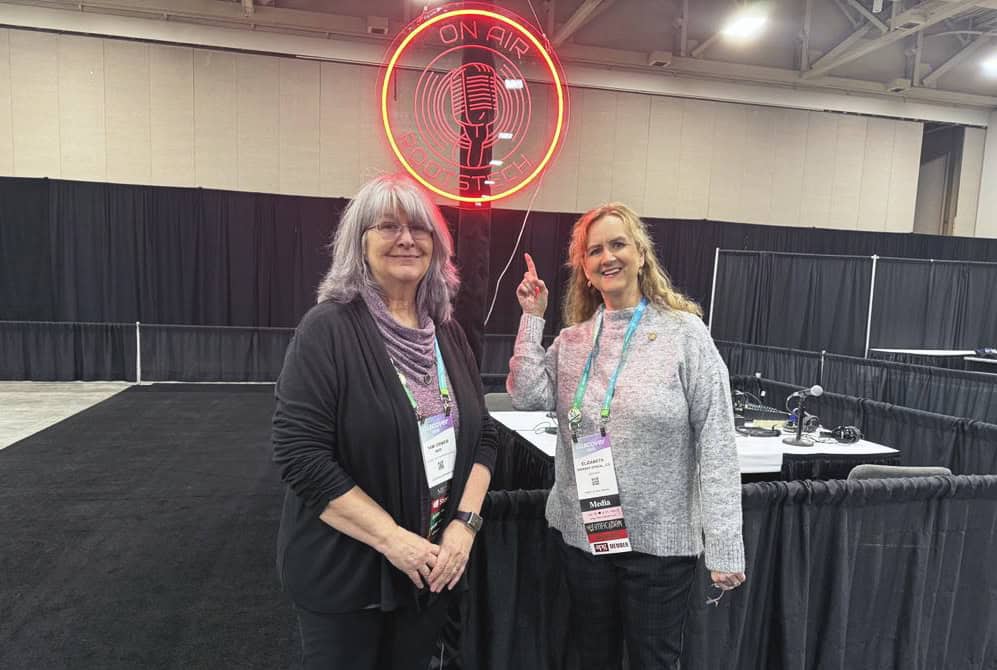
A conversation with Kate Guanci, founder of Archoral, recorded live at RootsTech 2026.
Kate Guanci says she looks at family history upside down. After half an hour with her at RootsTech 2026, we kind of think she’s onto something.
In this episode of the Branching Out Genealogy Podcast, Tami and Elizabeth sat down with Kate Guanci, founder and CEO of Archoral, to talk about why she walked away from the traditional pedigree chart and built something else entirely.
From a 6,000-square-foot warehouse of family history to a software platform that captures more than 14,000 different kinds of relationships, Kate is asking genealogists to reconsider what an “archive” actually is and who belongs in one.
A 6,000 Square Foot Family History
Kate’s journey into building Archoral started, as she puts it, with being “the keeper of my family history.” Farmers, as she notes, don’t throw anything away. She ended up with a 6,000-square-foot warehouse full of photos, documents, teddy bears from the 1800s, furniture, clothing, jewelry, and more.
As she began digitizing and reuniting the items with their family units, something unexpected happened. Characters started to emerge. She could see what her ancestors deemed important, what interested them, and how the people around them, neighbors, classmates, friends, also shaped their lives.
Traditional genealogy software couldn’t hold all of that. So she and her co-founder, LaVern Sula, built software that could.
Profiles Instead of Trees
The core innovation of Archoral is structural: it is profile-based rather than tree-based.
That means instead of starting with a pedigree chart and squeezing your family into its branches, you capture every name you come across, person or location, and build profiles. As you research, you index information back to those profiles, and the picture grows.
The result is software that can hold over 14,000 different relationship combinations. As Kate told us, that’s because real families aren’t just biological. They include:
- Adoptive, foster, and guardian relationships
- Mentors, teachers, students
- Coaches, athletes, and clergy
- The chosen family and the people who shape us beyond bloodlines
“We’re shaped so much by our environment and the people that we interact with,” Kate said. “The people that we choose to, and the people that we don’t, shape us.”
What the Name “Archoral” Means
“Archoral” stands for Archiving the Chorus of Life.
Kate explained it beautifully: everyone dances to the beat of a different drum, and all those drumbeats together make up the song of life. It takes everyone for the human story.
Partnership with Vivid-Pix
Longtime listeners will remember our episode with Rick Voight of Vivid-Pix. Archoral and Vivid-Pix have built a genuine integration: when you scan photos using Vivid-Pix Memory Station and import them into Archoral, the file names carry through so that photos, recorded stories, and transcriptions land already connected.
The partnership runs deeper than software, though. Kate, LaVern, and LaVern’s husband, Dan, are all caregivers, and brain health is paramount to them. Together with Rick at Vivid-Pix, they’re piloting a Preservation Initiative at Panola College and partnering with senior care centers, libraries, archives, and museums.
Indexing, Not Tagging (and Why It Matters)
One of Kate’s most quotable lines from the interview: “I’m allergic to tagging.”
The reason is simple. If you type “WWII,” someone else types “WW2,” and a third person types “World War Two,” none of those searches will find each other. Archoral’s indexing automatically connects things to source documents and timelines, so the work you do today still works for the researchers who come after you.
As Kate put it: “We’re preserving the past. But right now, today, as we’re sitting here, we’re making tomorrow’s history.”
Built for Every Kind of Learner
Elizabeth, a former teacher, pointed out something fun during the interview: Archoral hits every learning style. Visual learners get photos and documents. Auditory learners get recorded stories and oral histories. Kinesthetic learners get the hands-on indexing and uploading.
Kate confirmed it: “Everything in our application, you can come at from at least three different ways.”
That’s not by accident. Genealogy is often a lonely job, and Archoral is built to let family members with different strengths (the one who knows all the addresses, the one who remembers the names, and yes, the one who knows all the dirt) collaborate within a single archive.
Less Listening, More Doing
This episode also marks a small format change for the show. We’ve retired the “what we’re working on” and industry news segments in favor of something more actionable: things we’re loving (or using) that you can implement right away.
This week:
- Elizabeth’s pick: A new desk chair that has changed her research stamina.
- Tami’s pick: Microsoft 365 Copilot for Excel, which lets you just tell your spreadsheet what to do.
Teatime: Sweet Tea from New York
For Teatime this week, we poured a rare sweet tea. The New York State Education Department announced a collaboration between the New York State Library, the New York State Archives, and FamilySearch to digitize thousands of records and make them available online for free.
A retired couple from Utah is scanning books from the State Library’s collection, including family histories, local histories, and genealogy society journals.
Additionally, almost a quarter of a million pages of previously microfilmed records from the State Archives are now online for the first time. That includes colonial deeds and wills, land grants to Revolutionary War veterans, and convictions of British loyalists, which feels particularly timely given that this is the year of America 250.
If you have colonial New York ancestors, this is your moment to find out which side of the Revolution, if any, they were on.
Final Thoughts
Kate’s vision for Archoral is, in her words, “a 500-year view.” She wants to build software that endures, grows with its users, and captures the whole texture of a family rather than just the dates on a chart.
For genealogists who have ever felt that the traditional tree was leaving something out, Kate has built a different kind of home for your research.
Try the free trial and see if Archoral’s upside-down approach fits the way your family actually looks. Use discount code PODCAST50P for 50% off ANY Archoral subscription until 31 July 2026.
Please be sure to like and subscribe wherever you listen to – or watch – podcasts, and follow us on social media for updates, behind-the-scenes content, and more genealogy goodness!
Do you have a question or an idea for a future episode? Send us a message or leave a comment—we’d love to hear from you!
ARCHORAL DISCOUNT CODE:
Use code PODCAST50P for 50% off ANY Archoral subscription until 31 July 2026.
RESOURCES & LINKS
- Archoral
- RootsTech
- Vivid-Pix
- NYSED Announcement: NYSL, NYSA, and FamilySearch Collaboration
- Elizabeth’s new desk chair (affiliate link)
This episode is sponsored by Vivid-Pix. All product opinions are our own.